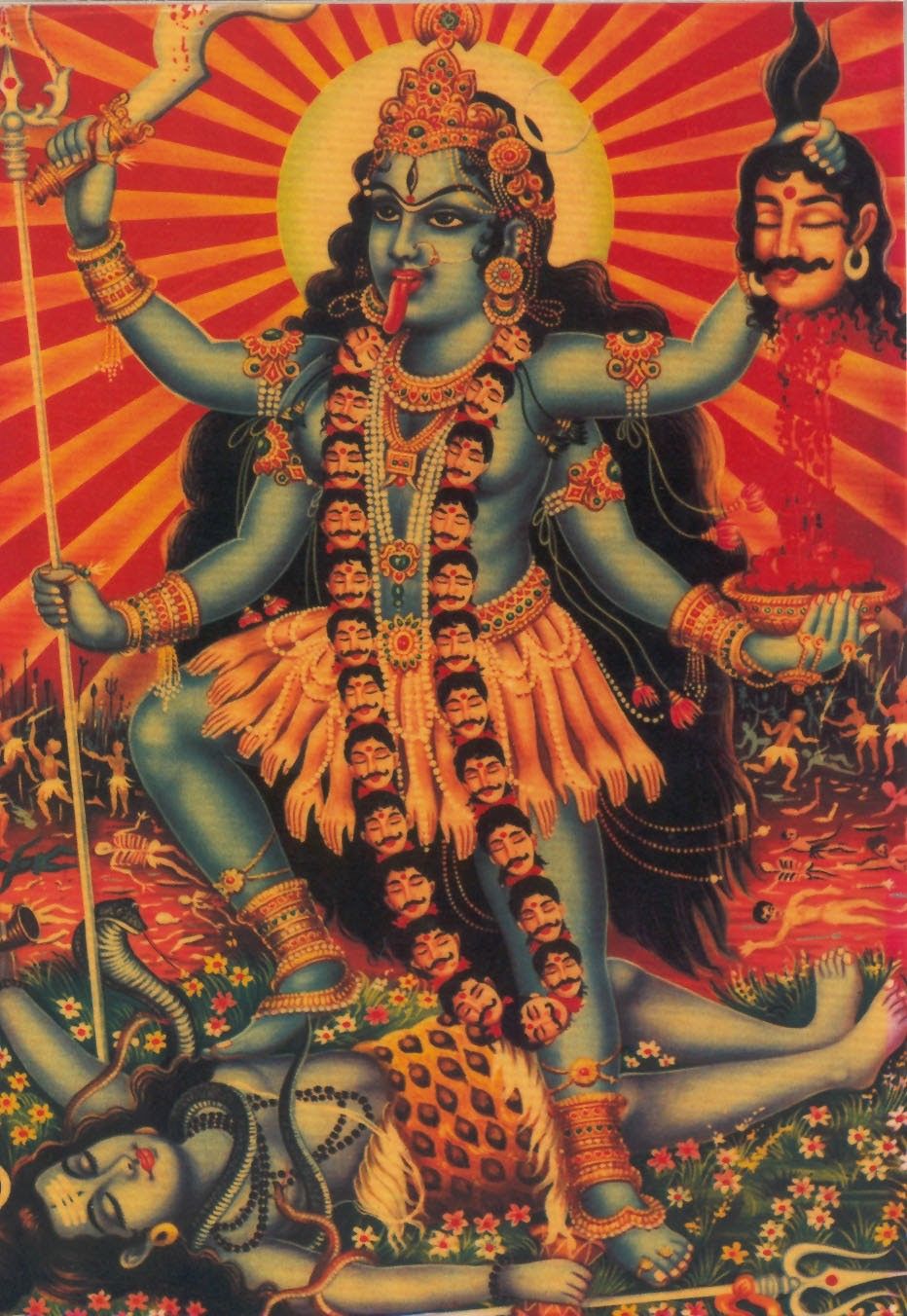
Kāli Kāli Mahākāli Bhadrakāli Namo’stu Te,
Kulaṁ Cha Kuladharmaṁ Cha Māṁ Cha Pālaya Pālaya.
Translation:
O Kali, O Mahakali, O Bhadrakali, I bow to You.
Please protect my lineage, my sacred family dharma, and me.
Who is Maa Bhadrakali and Why is She Worshipped?
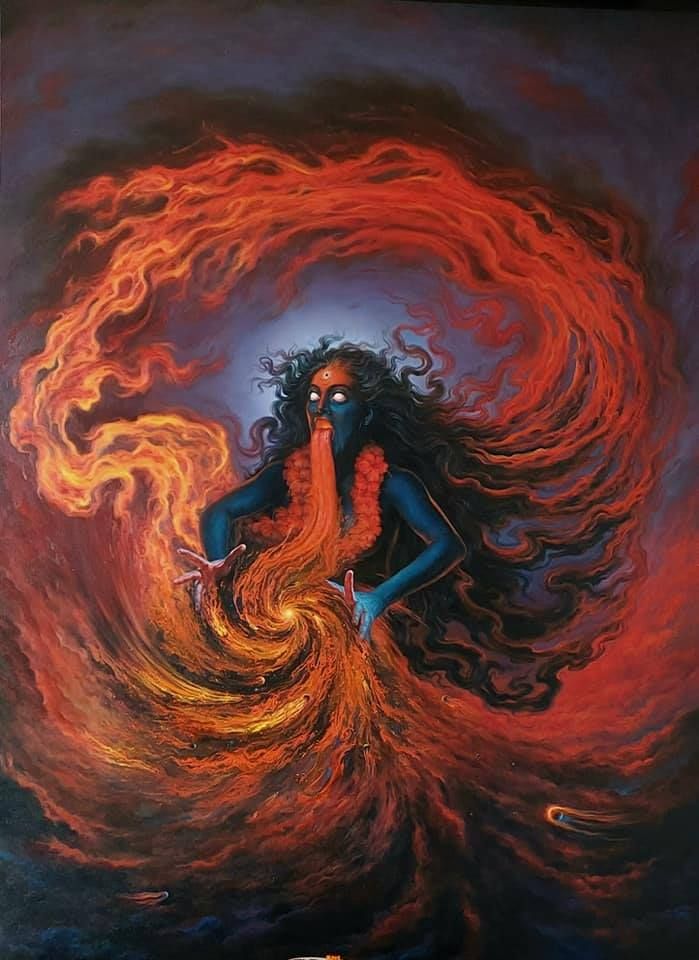
Maa Bhadrakali is one of the most powerful and spiritually intense forms of Adi Shakti, revered in Hindu Dharma as a fierce yet deeply compassionate Divine Mother. At first glance, her form may seem terrifying, but her essence is not destruction for its own sake. Her energy is protective, justice-giving, karmic-clearing, and fear-destroying. She does not appear to create chaos—she manifests when chaos has already crossed its limits, when adharma rises, and when divine balance must be restored.
This is what makes Maa Bhadrakali so profound. She is not merely a goddess of wrath. She is sacred force in motion. She destroys what is toxic, unjust, egoistic, spiritually impure, and harmful so that truth and dharma can survive. To devotees, she is not a distant or frightening deity. She is the Mother who becomes fierce when her children need protection. Her form may be ugra, but her essence is deeply maternal.
In spiritual practice, Maa Bhadrakali is worshipped for relief from fear, hidden enemies, psychic heaviness, karmic obstacles, anxiety, and intense life struggles. Many devotees also pray to her for protection from evil eye, negative energies, lower vibrations, and graha-related suffering. But her power is not limited to outer problems. She is equally the destroyer of inner enemies—fear, anger, ego, insecurity, toxic attachment, self-sabotage, and spiritual weakness. That is why true Bhadrakali worship is not only about seeking protection from the world. It is about asking the Divine Mother to remove whatever within us is blocking truth.
Even her name reveals this sacred paradox. “Bhadra” means auspicious, protective, blessed, and benevolent. “Kali” refers to the fierce, timeless Shakti beyond illusion and fear. Together, Bhadrakali means the auspicious fierce Mother—the Divine Power who appears terrifying only to ego, negativity, and demonic tendencies. To a sincere devotee, she is protection itself.
The Mythological Origin of Maa Bhadrakali
The mythology of Maa Bhadrakali is rich and layered, and she is not limited to a single story. Across Shaiva, Shakta, Tantric, and regional traditions, she appears in multiple connected forms, each carrying the same spiritual truth: when dharma is threatened, divine wrath becomes sacred protection.
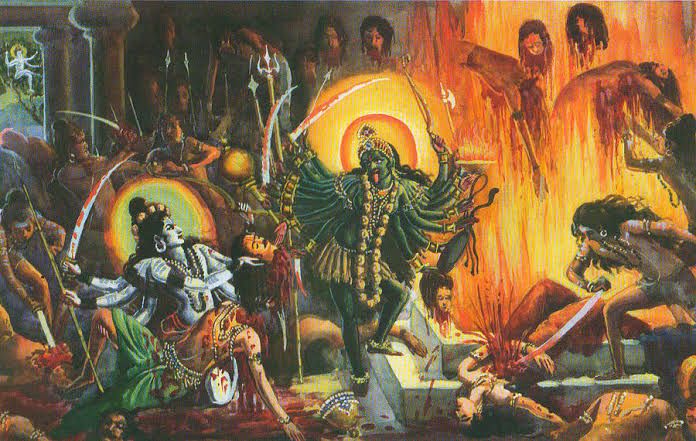
One of the most widely known origins of Maa Bhadrakali is connected to the story of Daksha Yajna. Daksha Prajapati, the father of Maa Sati, organized a grand yajna but, driven by ego and hatred, deliberately insulted Lord Shiva and did not invite him. Maa Sati, despite being uninvited, went to the yajna and witnessed the public humiliation of her Lord. Unable to bear the insult to Shiva and the collapse of dharma before her eyes, she immolated herself in the sacrificial fire.
When Lord Shiva learned of this, his grief turned into cosmic rage. From that intense fury, many traditions describe the manifestation of Veerabhadra and Bhadrakali, who descended to destroy Daksha’s false yajna and punish adharma.
This story is deeply symbolic. Bhadrakali does not destroy yajna itself—she destroys false yajna. Daksha’s ritual had fire, priests, mantras, grandeur, and divine attendance, but it lacked humility, surrender, truth, and Shiva-tattva. That is why Bhadrakali’s destruction is spiritually meaningful. It teaches that ritual without devotion is empty, and power without humility is dangerous. She is not anti-ritual. She is anti-hypocrisy.
Daksha represents pride and ritualism without heart. Maa Sati represents pure devotion and divine dignity. Shiva’s rage represents truth reacting to adharma. Bhadrakali is the sacred force that destroys false pride. When religion becomes ego and worship loses soul, the Mother does not remain soft—she becomes Bhadrakali.
Bhadrakali in Devi Tattva, Darika Vadha, and Sacred Symbolism
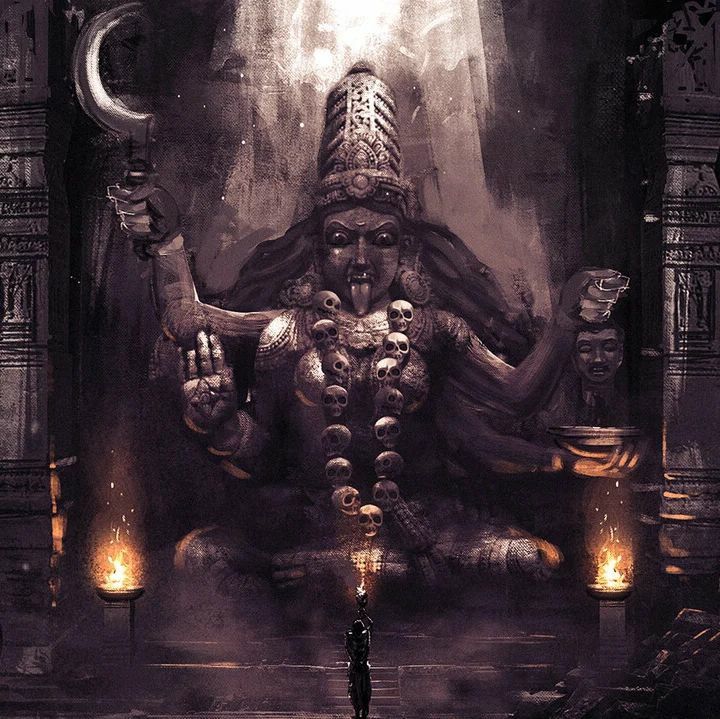
Maa Bhadrakali is also deeply connected to the fierce battle forms of Devi. In the Devi Mahatmya, Kali emerges from the anger of the Divine Mother during battle to destroy demonic forces like Chanda, Munda, and Raktabija. In many later traditions and temple lineages, that same fierce battlefield energy is worshipped as Bhadrakali. This is why many devotees understand Kali as the vast cosmic fierce principle, while Bhadrakali is that same power in an auspicious, protective, justice-giving form.
A beloved and especially powerful regional tradition comes from South India, particularly Kerala, where Maa Bhadrakali is associated with the slaying of the demon Darika (or Daruka in some versions). In this story, a demon gains boons, becomes arrogant, and begins terrorizing devas, sages, and the world. Then Bhadrakali manifests as a terrifying warrior goddess and destroys him, restoring balance.
In Kerala’s living temple traditions, this Darika-vadha identity is especially strong. Here, Maa Bhadrakali is not only the destroyer of arrogance, but also the guardian of sacred land, protector of temples, remover of epidemic and fear, and fierce mother of kshetra-raksha. This is why Bhadrakali worship in Kerala, Tamil Nadu, and parts of Karnataka feels so ancient, raw, and spiritually charged.
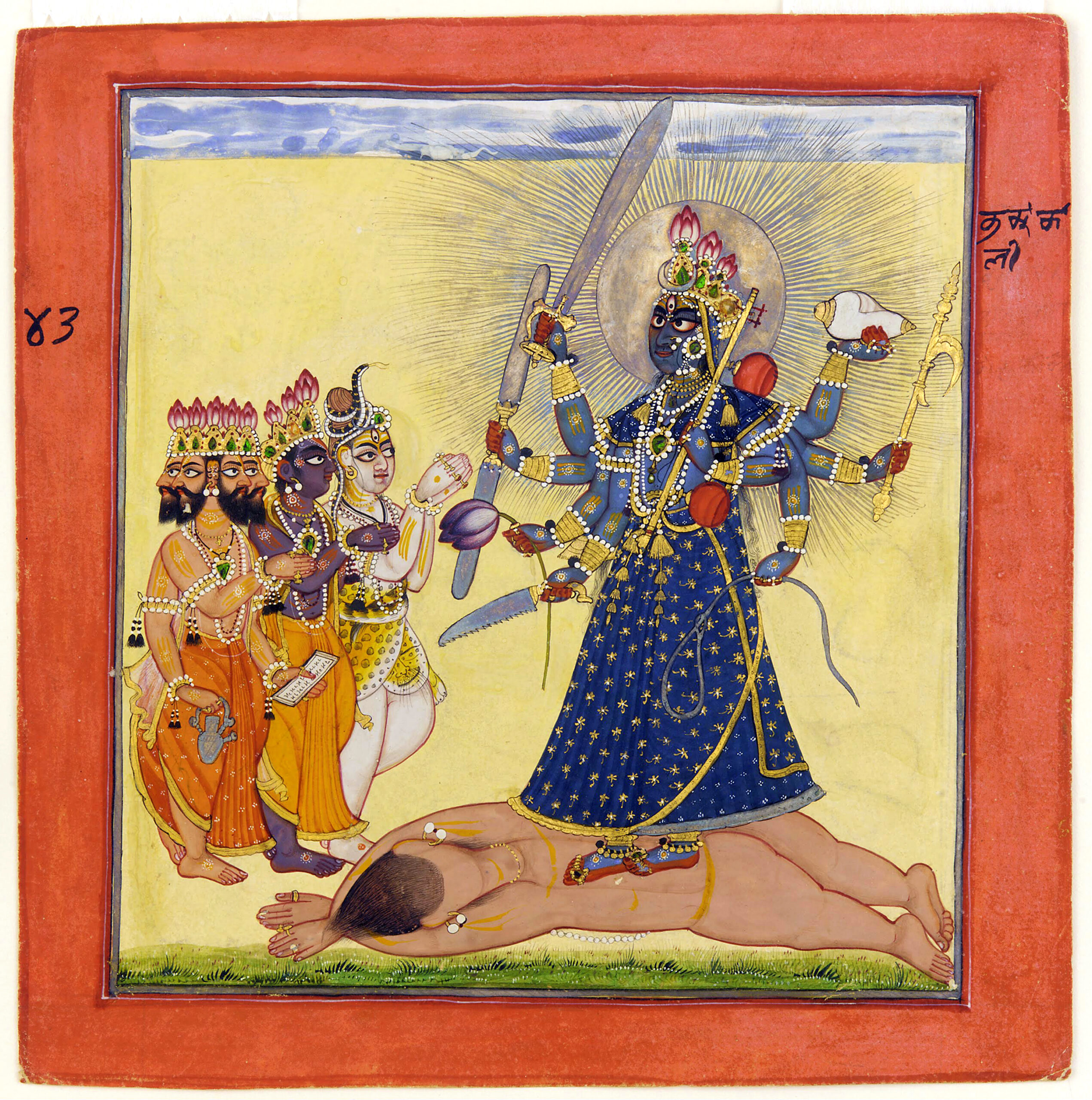
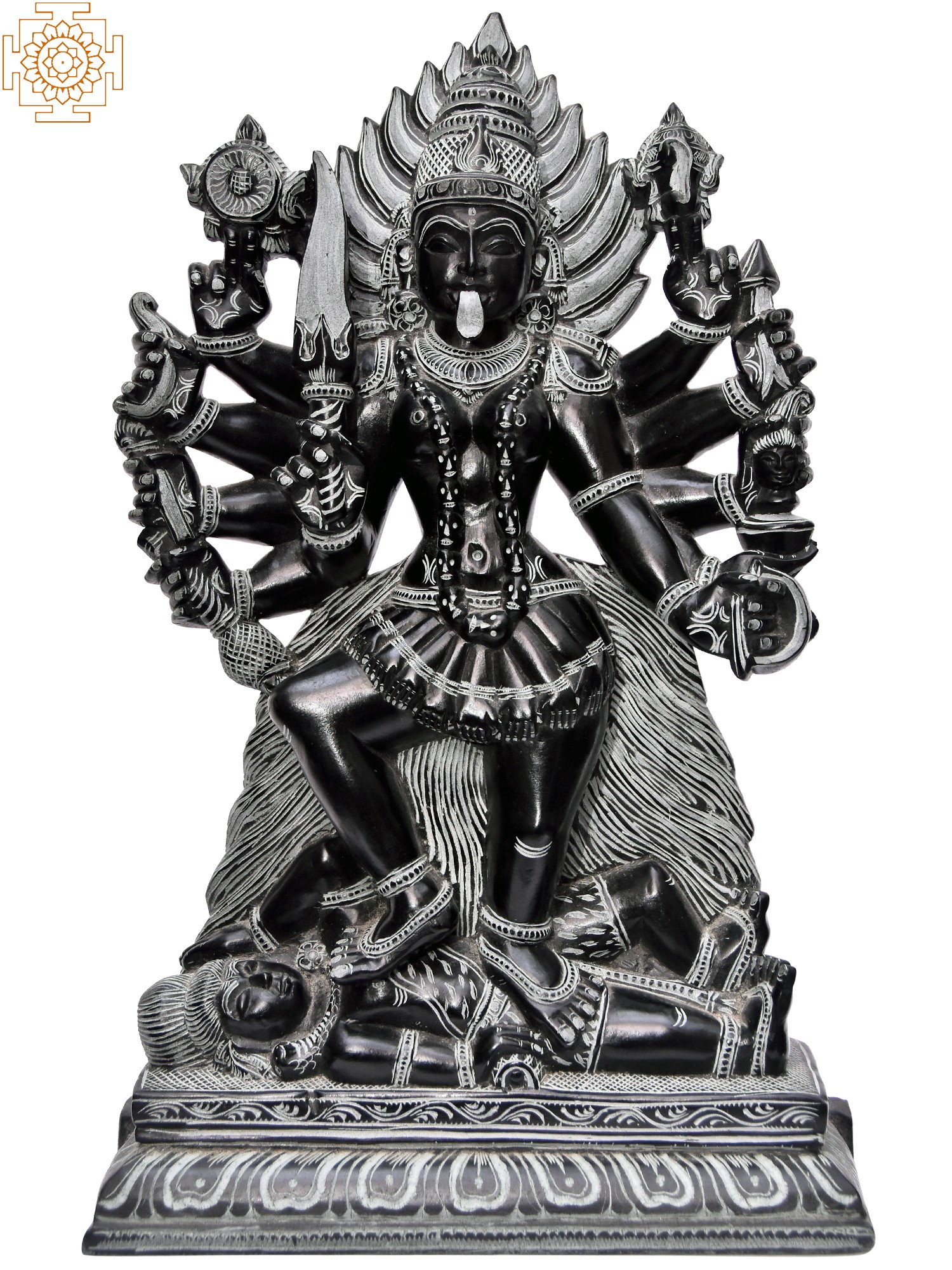
Her iconography also carries deep meaning. The sword represents cutting ego, illusion, and karmic knots. The trident symbolizes mastery over creation, preservation, and destruction. A severed head reflects the destruction of false identity. A skull garland reminds us of the impermanence of worldly pride. Her wide eyes, fangs, and fierce expression are not symbols of negativity—they represent unstoppable Shakti. Her form is esoteric spiritual psychology expressed through sacred imagery.
What is Bhadrakali Jayanti and Why is it Spiritually Powerful?
Bhadrakali Jayanti is the sacred manifestation day of Maa Bhadrakali. It is commonly observed on Krishna Paksha Ekadashi of the Jyeshtha month, usually falling in May or June, and in some regions it is also associated with Apara Ekadashi or Jalakrida Ekadashi traditions.
For devotees, this is not just a festival date. It is one of the most powerful days to seek protection, courage, justice, release from negativity, and inner spiritual strength. It is a day when the fierce Mother is remembered not for fear, but for refuge.
Bhadrakali Jayanti is considered highly auspicious for praying for protection from hidden enemies, courage during difficult life phases, relief from fear and heavy energies, release from karmic blockages, and spiritual empowerment through sincere devotion.
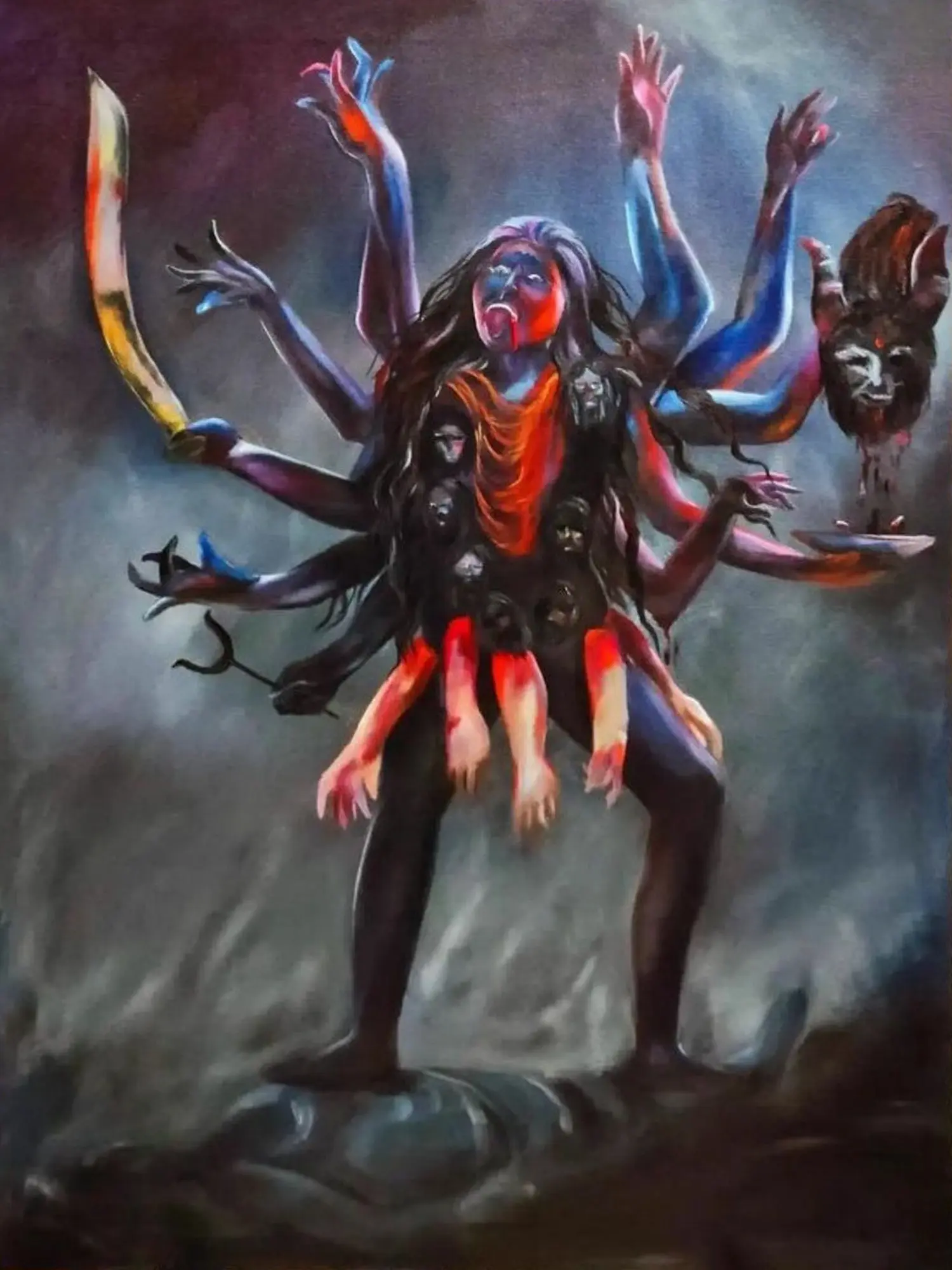
How to Worship Maa Bhadrakali on Bhadrakali Jayanti
The beauty of Bhadrakali Jayanti is that her worship does not need to be complicated to be powerful. Many assume that fierce goddess worship must involve complex tantra or secret rituals, but sincere devotion, purity, discipline, and heartfelt prayer are more than enough.
The day is ideally begun with an early morning bath, inner silence, and a clean puja space. A respectful image or murti of Maa Bhadrakali, Kali, or Devi can be placed for worship. Traditional offerings may include red flowers (especially hibiscus), kumkum, a diya lit with ghee or sesame oil, incense, coconut, fruits, jaggery or sweets, and in some traditions, betel leaf, black sesame, or lemon garlands.
Simple and safe mantras such as “Om Bhadrakalyai Namah,” “Om Kreem Kalikayai Namah,” or “Jai Maa Bhadrakali” are commonly chanted. For a simple devotional practice, chanting “Om Bhadrakalyai Namah” 108 times is considered highly aligned with her energy. Devotees may also listen to or recite the Kali Chalisa, Devi Kavach, Argala Stotram, or selected chapters of Durga Saptashati.
Fasting is optional and should always be done according to one’s health. If observed, it is often kept through sattvic food, and by avoiding onion, garlic, anger, gossip, lustful content, and negativity. In truth, the highest fast on Bhadrakali Jayanti is not only from food—it is from impurity of mind.
Temple darshan on this day is especially auspicious. Visiting a Kali or Bhadrakali temple can make the day feel even more alive and sacred. Charity is also considered powerful—donating food, feeding girls, women, the needy, or animals according to one’s tradition carries deep spiritual merit.
A simple and powerful prayer for this day is:
“Maa, remove fear, remove negativity, and give me the courage to walk in dharma.”
What to Avoid and the Highest Way to Worship Maa Bhadrakali
Bhadrakali Jayanti should be observed with respect, purity, and discipline. It is best to avoid fights, lies, ego battles, intoxicants, insulting women or elders, and non-vegetarian food if one is observing vrata or puja. Most importantly, one should avoid dark occult experimentation unless under the guidance of a genuine guru. Maa Bhadrakali’s energy is fierce and sacred, not something to be approached casually.
Ultimately, the highest way to worship Maa Bhadrakali is not merely to ask for the destruction of outer enemies. The deepest prayer is:
“Destroy the enemy within me first.”
That is the real Bhadrakali sadhana. When a devotee asks her to remove fear, jealousy, anger, insecurity, self-doubt, toxic attachment, and weakness, her grace becomes truly transformative.
Maa Bhadrakali is the fierce and auspicious Mother who protects the righteous, destroys negativity, restores justice, and awakens fearless Shakti in the devotee. Her mythology reminds us that when dharma is insulted, when devotion is mocked, or when darkness becomes unbearable, the Divine Mother does not remain silent. She rises. She corrects. She protects.
And that is why Bhadrakali Jayanti is not just a ritual observance. It is a sacred reminder that divine protection is real, fierce compassion exists, and the Mother’s most intense form is still, at its heart, love.
