What is Vat Savitri Vrat and Why is it Sacred?
Vat Savitri Vrat is one of the most sacred and spiritually powerful Hindu vrats. Married women mainly observe this vrat for the long life, protection, and well-being of their husbands. But this vrat means much more than marital longevity. It celebrates sankalp, pativrata shakti, devotion, feminine strength, and faith powerful enough to transform destiny itself.
The vrat comes from the immortal story of Savitri and Satyavan, one of the most emotionally powerful narratives in Hindu tradition. Savitri’s devotion, wisdom, tapasya, and unwavering dharmic strength became so extraordinary that she compelled Yamraj to return her husband’s life. That is why people remember Vat Savitri Vrat as the day when devotion stood before death and refused to bow.
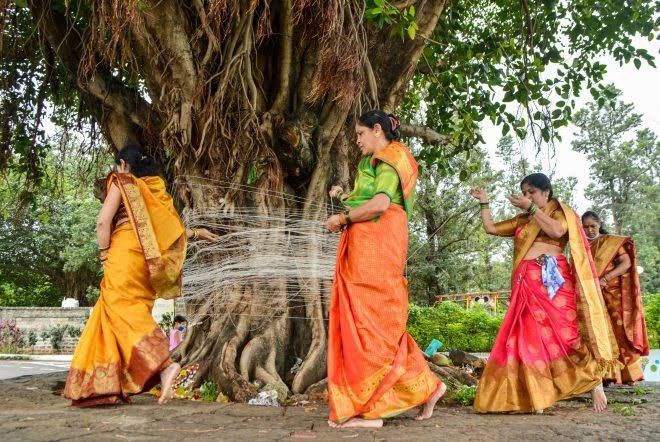
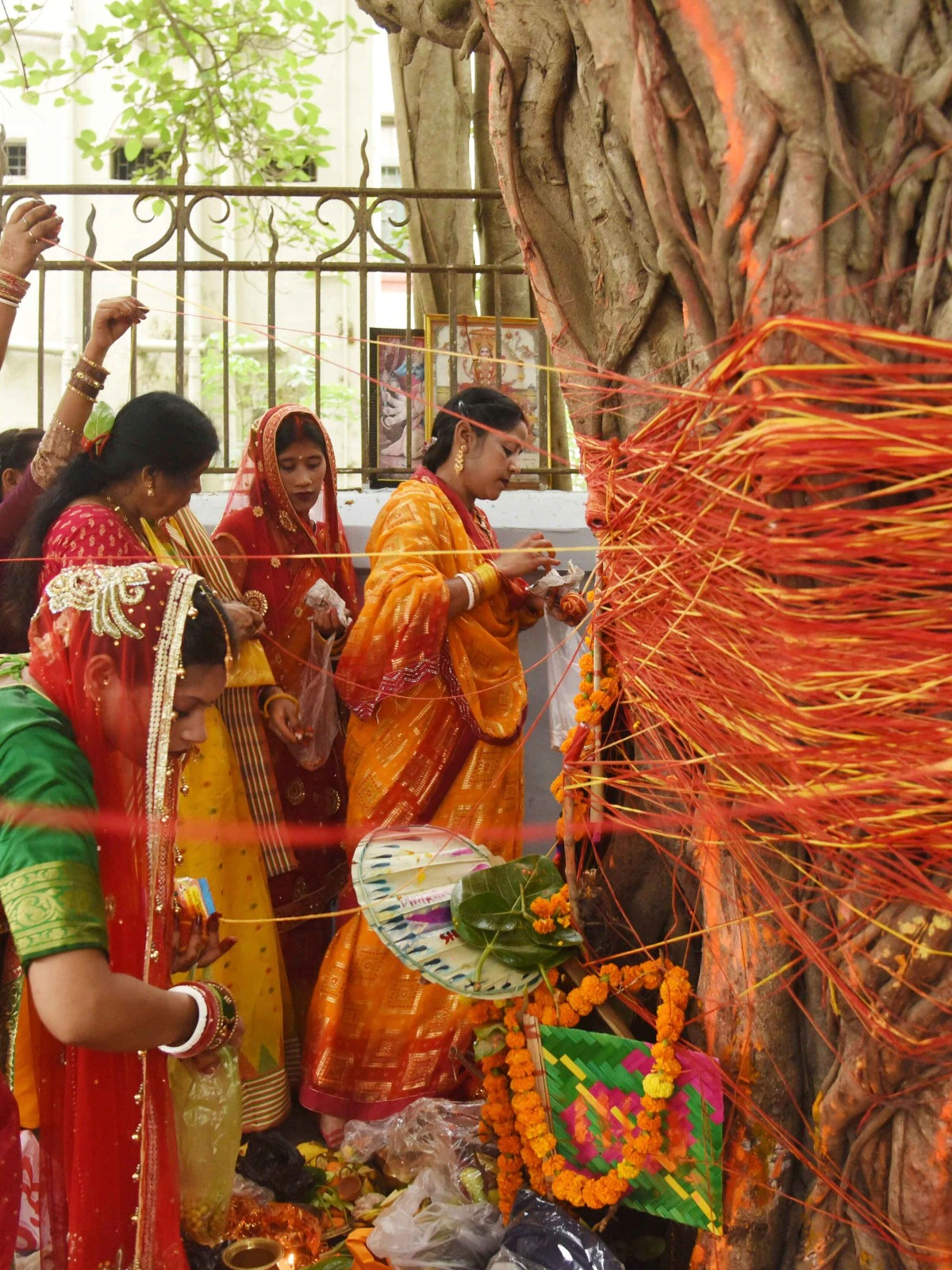
The word “Vat” refers to the banyan tree (वट वृक्ष), which holds deep importance in this vrat. Hindu tradition sees the banyan tree as a symbol of long life, stability, endurance, and spiritual continuity. Women worship the Vat tree, tie sacred thread around it, perform parikrama, and pray for akhand saubhagya.
This vrat does not only honor marriage. It also honors the spiritual strength, discipline, and devotion of a woman within grihastha dharma. That is why Sanatan tradition considers it one of the strongest and most graceful symbols of stri shakti.
The Story of Savitri and Satyavan
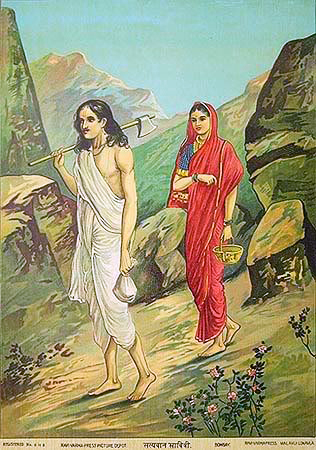
The story of Savitri and Satyavan forms the heart of Vat Savitri Vrat. According to the Mahabharata tradition, Savitri knowingly chose Satyavan even after learning that he was destined to die exactly one year after marriage.
King Ashwapati, who remained childless for many years, performed intense tapasya and prayers for a child. Pleased with his devotion, Devi Savitri blessed him with a daughter named Savitri. She became known for her beauty, wisdom, purity, and spiritual radiance.
When the time for marriage arrived, Savitri chose Satyavan, a noble prince living in the forest with his blind and exiled father Dyumatsena. Then Devarshi Narada revealed that Satyavan would die exactly one year after marriage. Even after hearing this, Savitri did not change her decision. She accepted her fate consciously and stood firm in her choice.
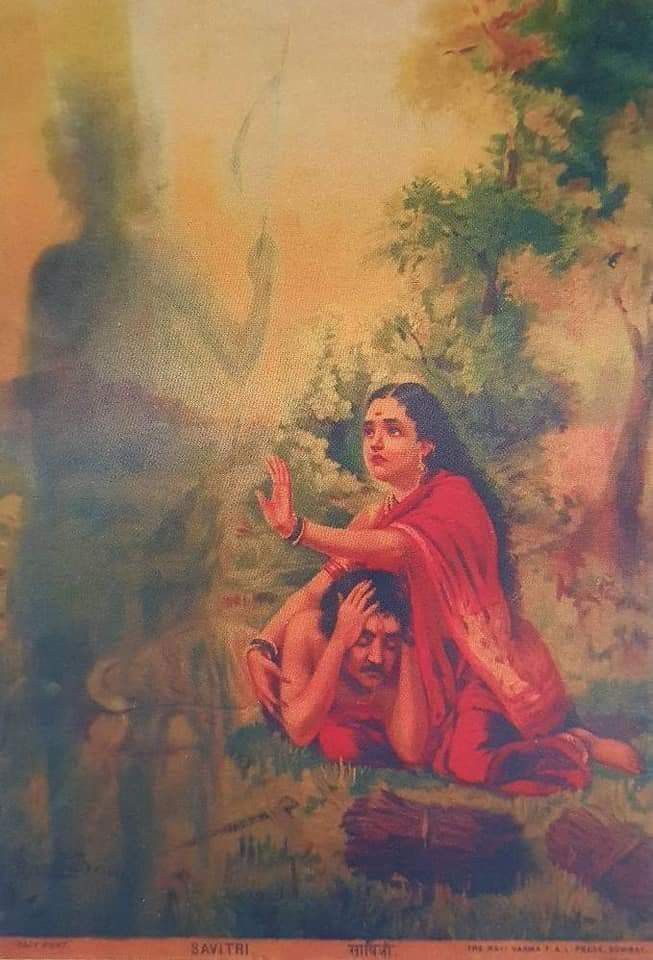
As the destined day approached, Savitri prepared herself spiritually. She observed a strict vrat, fast, and prayerful vigil. On the final day, Satyavan went into the forest to cut wood, and Savitri went with him. While working, Satyavan suddenly became weak and rested his head in Savitri’s lap. Soon after, he died. Many traditions believe this happened near a banyan tree, which is why the Vat tree became sacred in this vrat.
This is why Vat Savitri Vrat feels so emotionally powerful. It is not symbolic romance. It is love standing before death.
Savitri and Yamraj
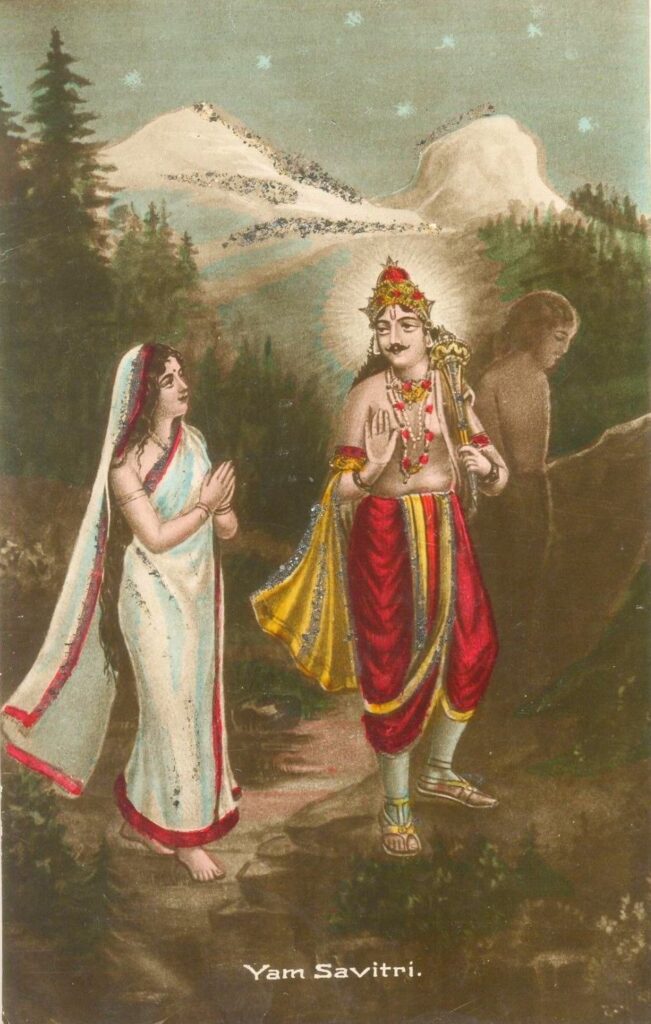
After Satyavan’s death, Yamraj appeared to take his soul. Instead of collapsing in grief, Savitri followed him fearlessly. Again and again, Yamraj asked her to return, but Savitri continued walking behind him with humility, wisdom, dignity, and dharma.
Savitri did not fight with anger or desperation. She won through truth, restraint, intelligence, and spiritual strength. Deeply impressed by her purity and noble speech, Yamraj offered her boons — anything except Satyavan’s life.
Savitri first asked for the eyesight and kingdom of her blind father-in-law Dyumatsena. Then she asked blessings for her father Ashwapati. Finally, she asked for children for herself and Satyavan. That final boon created a divine paradox. How could Savitri have children with Satyavan if he remained dead?
Bound by his own words and dharma, Yamraj restored Satyavan’s life. This moment became the spiritual heart of Vat Savitri Vrat. Savitri did not reject destiny emotionally. She faced destiny with intelligence, devotion, and dharma.
That is why devotees worship Savitri so deeply. They remember her not only as an ideal wife, but also as a woman of sankalp, courage, wisdom, and spiritual authority.
When is Vat Savitri Vrat Observed and How is it Celebrated?
Different regions observe Vat Savitri Vrat on different dates. In North India and the Purnimanta tradition, devotees usually observe it on Jyeshtha Krishna Amavasya. In Maharashtra, Gujarat, Goa, and some Western and Southern traditions, devotees observe it as Vat Purnima on Jyeshtha Purnima.
In 2026, many calendars list Vat Savitri Amavasya on 16 May 2026, while many regional traditions observe Vat Purnima or regional Vat Savitri on 29 June 2026.
Women usually wake up early, take a sacred bath, and wear clean traditional clothes. Many wear red or yellow along with symbols of saubhagya such as sindoor, bangles, bindi, and mangalsutra. Devotees then take a heartfelt sankalp for the long life, protection, and prosperity of their husbands and for dharmic strength in married life.
The worship of the banyan tree forms the central ritual of this vrat. Devotees offer water, kumkum, akshat, flowers, diya, incense, sweets, and fruits. They tie a sacred thread around the tree and perform 7 or 108 parikramas depending on tradition. Many devotees also listen to or recite the Vat Savitri Vrat Katha, which remains an essential part of the vrat.
People may observe the fast as Nirjala, Phalahar, one-meal vrat, or a strict day-long fast depending on health and family customs.
The Deeper Spiritual Meaning of Vat Savitri Vrat
Most people miss the deeper meaning of this vrat. Vat Savitri Vrat does not only focus on marriage. It celebrates female spiritual strength, devotion with intelligence, steadiness during crisis, and love that does not lose dignity.
Savitri did not win because she cried, begged, or collapsed emotionally. She won because she stayed pure, disciplined, truthful, fearless, and spiritually awake. That is why Sanatan Dharma remembers her eternally.
This vrat teaches that real feminine strength is not loud or aggressive. It is calm, conscious, resilient, and deeply rooted in dharma. Savitri faced death itself, yet she never lost her dignity, clarity, or inner balance.
The deepest prayer of this vrat is not only, “May my husband live long.” It is also: “May my marriage remain protected, may dharma stay strong in my home, and may I receive Savitri-like strength, wisdom, and grace.”
Vat Savitri Vrat teaches one powerful truth: destiny may already exist, but tapasya, purity, devotion, and dharma can still transform it. That is the real miracle of Savitri.
